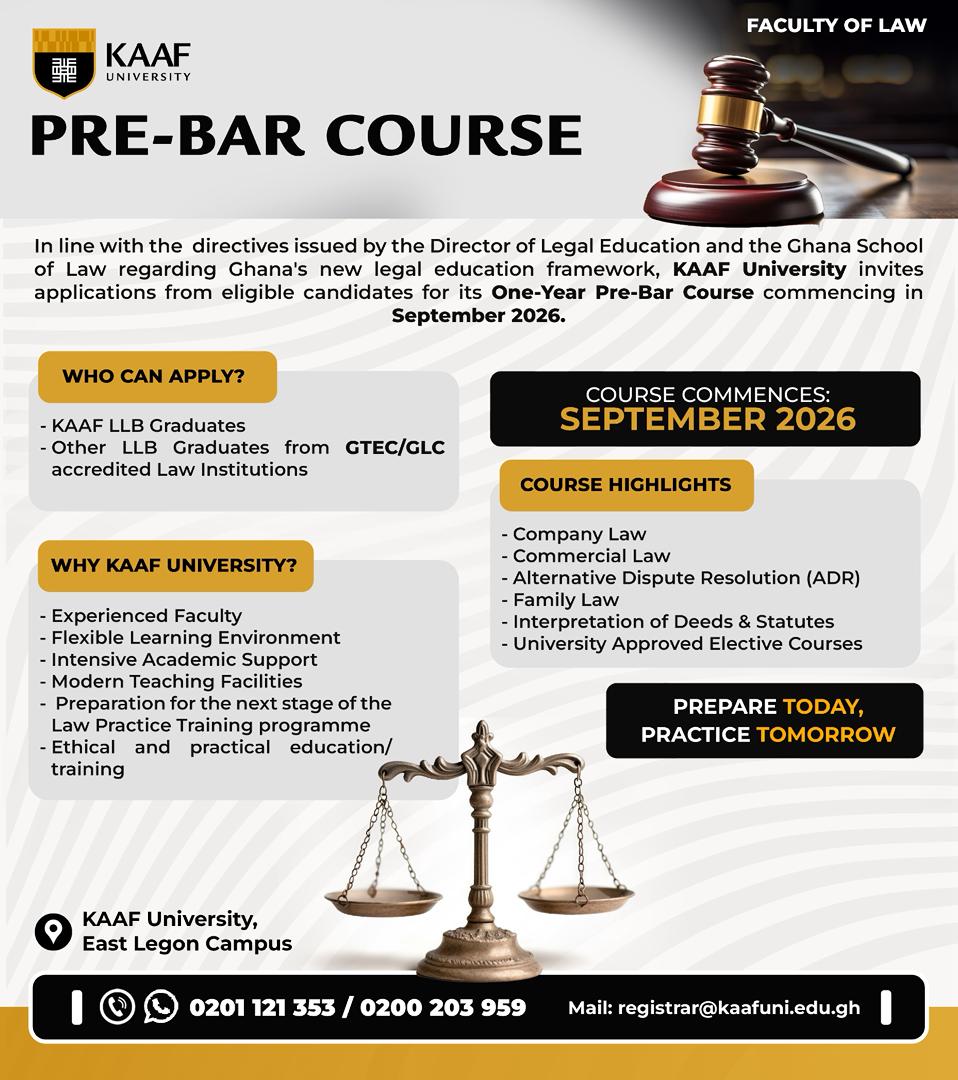
The LLB programme at KAAF University is structured to provide students with a strong academic foundation in legal principles, critical reasoning, and the practical application of the law. It equips graduates with the intellectual tools, analytical skills, and professional ethics required to practice law, engage in public service, or pursue advanced legal studies in Ghana and beyond.
The programme blends theoretical legal education with practical training, ensuring students understand both the philosophical underpinnings of law and its real‑world application in courts, institutions, and society.
Academic Philosophy and Purpose
The LLB programme is built on the belief that legal education must develop:
-
Critical thinkers capable of analyzing complex legal issues
-
Ethical professionals committed to justice, fairness, and integrity
-
Skilled communicators able to argue persuasively and write clearly
-
Practically oriented graduates who understand how law functions in society
The curriculum therefore integrates doctrinal study with experiential learning to produce well‑rounded legal professionals.
Key Features of the Programme
-
Rigorous Coursework Foundational and advanced courses in constitutional law, criminal law, contract law, torts, administrative law, property law, jurisprudence, and more.
-
Practical Legal Training Students participate in moot courts, simulations, debates, and legal writing exercises to build advocacy and reasoning skills.
-
Internships and Legal Attachments Structured placements in law firms, courts, public institutions, and legal organizations provide real exposure to legal processes.
-
Legal Writing and Research Emphasis on drafting, legal analysis, case briefs, opinions, and academic research.
-
Professional Ethics and Conduct Training in legal ethics, professional responsibility, and the role of law in society.
Graduate Preparedness
Upon completion of the LLB programme, graduates will be able to:
-
Demonstrate strong understanding of legal principles and doctrines
-
Analyze legal problems using critical and logical reasoning
-
Apply legal knowledge in practical contexts such as advocacy, drafting, and dispute resolution
-
Uphold professional ethics and contribute to justice delivery
-
Pursue the Professional Law Course at the Ghana School of Law or advanced legal studies (LLM, MPhil, PhD)
The four‑year LLB curriculum at KAAF University integrates compulsory core courses, electives, and clinical legal education to ensure students develop strong doctrinal knowledge, analytical skills, and practical legal competence. The programme is designed to expose students to the full spectrum of legal study — from foundational principles to advanced areas of specialization — while strengthening advocacy, legal writing, and professional ethics.
Below is a polished, publication‑ready presentation of the curriculum areas.
Core Areas of Study
-
Legal Systems & Methods Introduction to the nature of law, legal reasoning, sources of law, and techniques of legal research.
-
Constitutional & Administrative Law Study of governance structures, constitutional principles, separation of powers, judicial review, and administrative processes.
-
Law of Contract & Tort Foundational private law subjects covering obligations, liabilities, remedies, and civil wrongs.
-
Criminal Law Principles of criminal responsibility, offences, defenses, and the administration of criminal justice.
-
Family Law & Succession Legal rules governing marriage, divorce, custody, inheritance, wills, and estate administration.
-
Commercial & Company Law Business‑related legal frameworks including contracts, sales, partnerships, companies, and commercial transactions.
-
Land Law & Equity Property rights, land ownership systems, equitable doctrines, trusts, and remedies.
-
Jurisprudence & Legal Theory Exploration of philosophical foundations of law, legal reasoning theories, and schools of legal thought.
-
Human Rights Law National and international human rights frameworks, enforcement mechanisms, and contemporary issues.
-
Public International Law Principles governing relations between states, treaties, international organizations, and global legal norms.
-
Alternative Dispute Resolution (ADR) & Legal Drafting Practical training in negotiation, mediation, arbitration, and drafting of legal documents.
Practical and Experiential Components
-
Clinical Legal Education / Moot Courts Simulated court sessions, advocacy training, client interviewing, and exposure to real legal processes.
-
Research Project in Law A supervised final‑year research project that develops students’ ability to conduct legal research, analyze issues, and present scholarly arguments.
Graduates of the LLB programme at KAAF University emerge with strong analytical abilities, professional ethics, and practical legal skills that prepare them for further legal training, public service, and diverse roles within the justice system. The outcomes below reflect the core competencies expected of every LLB graduate.
Key Graduate Competencies
-
Solid Understanding of Substantive and Procedural Law Graduates demonstrate mastery of major areas of Ghanaian law, including constitutional, criminal, civil, commercial, and procedural rules that govern legal processes.
-
Application of Legal Reasoning and Argumentation They apply logical reasoning, statutory interpretation, case analysis, and persuasive argumentation to real and hypothetical legal problems.
-
Legal Research and Professional Drafting Graduates conduct effective legal research using statutes, case law, journals, and digital databases, and draft professional legal documents such as briefs, opinions, contracts, and pleadings.
-
Ethical Conduct and Professional Responsibility They uphold the highest standards of legal ethics, integrity, confidentiality, and responsibility expected in legal practice and public service.
-
Critical Analysis of Legal Issues Graduates critically examine national, regional, and international legal issues, demonstrating awareness of contemporary legal developments and global justice concerns.
-
Persuasive Written and Oral Advocacy They communicate clearly and persuasively in written submissions, oral arguments, moot courts, and professional interactions.
-
The LLB programme at KAAF University is supported by modern academic, digital, and practical training facilities that enhance legal education and prepare students for real‑world legal practice. These resources ensure students gain strong doctrinal knowledge, research skills, and advocacy competence.
Academic and Research Facilities
-
Modern Law Library A well‑resourced library stocked with:
-
Textbooks and legal treatises
-
Case law reports
-
Statutes and legislative materials
-
Journals and scholarly publications
-
Online legal databases for research and case analysis
This provides students with comprehensive access to both physical and digital legal resources.
-
-
Digital Legal Resources & E‑Learning Platforms Students benefit from access to:
-
Online case law repositories
-
Legal research databases
-
E‑books and electronic journals
-
Virtual learning platforms for coursework, assignments, and discussions
-
Advocacy and Practical Training Facilities
-
Moot Courtroom A dedicated courtroom‑style facility used for:
-
Advocacy training
-
Simulated court proceedings
-
Moot competitions
-
Oral argument practice
This environment helps students develop confidence, courtroom etiquette, and persuasive advocacy skills.
-
Professional Exposure and Partnerships
-
Internships and Clerkships The programme maintains partnerships with:
-
Law firms
-
Courts
-
Public institutions
-
Legal aid organizations
These collaborations provide students with practical exposure to real legal processes, client interactions, drafting, and courtroom procedures.
-
-
The LLB programme at KAAF University offers both 4‑year and 3‑year study pathways, designed to accommodate applicants with diverse academic backgrounds. Admission standards follow national guidelines for legal education and ensure that students possess the foundational competencies required for rigorous legal study.
4‑Year LL.B Programme
WASSCE Applicants
Applicants must have six (6) credit passes (A1–C6) including:
-
English Language
-
Core Mathematics
-
Integrated Science or Social Studies
-
Any three (3) relevant elective subjects
SSSCE Applicants
Applicants must have six (6) credit passes (A–D) including:
-
English Language
-
Core Mathematics
-
Integrated Science or Social Studies
-
Any three (3) relevant elective subjects
Mature Applicants
-
Must be 25 years or above
-
Additional institutional requirements may apply (e.g., entrance examination or interview)
3‑Year LL.B Programme
Applicants must:
-
Hold a good first degree (minimum Second Class Lower Division) from a recognized university.
-
Applicants with professional qualifications equivalent to a degree may also be considered, including:
-
ACCA
-
CIM
-
Other recognized professional certificates
-
Successful applicants are admitted into the 3‑year post‑first‑degree LLB track.
Available Course Sessions
-
Regular
-
Evening
-
Weekend
These flexible study options allow students to pursue legal education according to their schedules, professional commitments, and personal needs.
The LLB programme at KAAF University offers both 4‑year and 3‑year study options, designed to accommodate applicants with different academic backgrounds. Admission requirements follow national standards for legal education and ensure that students possess the foundational skills needed for rigorous legal study.
4‑Year LL.B Programme
WASSCE Applicants Applicants must have six (6) credit passes (A1–C6) including:
-
English Language
-
Core Mathematics
-
Integrated Science or Social Studies
-
Any three (3) relevant elective subjects
SSSCE Applicants Applicants must have six (6) credit passes (A–D) including:
-
English Language
-
Core Mathematics
-
Integrated Science or Social Studies
-
Any three (3) relevant elective subjects
Mature Applicants
-
Must be 25 years or above
-
Additional institutional requirements may apply (e.g., entrance examination or interview)
3‑Year LL.B Programme
Applicants must:
-
Hold a good first degree (minimum Second Class Lower Division) from a recognized university.
-
Applicants with professional qualifications equivalent to a degree may also be considered, such as:
-
ACCA
-
CIM
-
Other recognized professional certificates
-
These applicants are admitted into the 3‑year post‑first‑degree LLB track.
Available Course Sessions
-
Regular
-
Evening
-
Weekend
These flexible study options allow students to pursue legal education according to their schedules and professional commitments.
The LLB programme at KAAF University provides a comprehensive support system designed to strengthen students’ academic progress, professional development, and practical legal skills. This support ensures that Law students receive continuous guidance throughout their studies and are well prepared for legal practice, public service, and advanced legal training.
Academic Support and Advising
-
Academic Advising Students receive structured guidance on course selection, academic planning, and programme progression. Advisors help students align their academic choices with career goals and legal interests.
-
Faculty Guidance Lecturers provide continuous academic support through consultations, feedback on assignments, and guidance on legal research and writing.
Legal Clinics and Mentorship
-
Legal Clinics Practical exposure through legal clinics allows students to engage with real or simulated client issues, strengthening their problem‑solving and advisory skills.
-
Mentorship by Legal Practitioners Experienced lawyers, judges, and legal professionals mentor students, offering career insights, professional advice, and exposure to real legal practice.
Workshops and Seminars
-
Current Legal Issues Regular workshops and seminars expose students to emerging legal trends, contemporary legal debates, and reforms in Ghana’s justice system.
-
Professional Development Sessions Training in legal writing, advocacy, ethics, and courtroom etiquette enhances students’ readiness for professional practice.
Practical Training and Experiential Learning
-
Moots and Debates Moot court sessions and debates help students develop persuasive advocacy, critical thinking, and public speaking skills.
-
Internships and Clerkships Partnerships with law firms, courts, and public institutions provide hands‑on experience in drafting, litigation support, client interaction, and legal research.
Student Support Services
-
Counseling Services Support for personal, emotional, and academic challenges to promote student well‑being.
-
IT Resources Access to digital legal databases, e‑learning platforms, and ICT facilities for research and coursework.
-
Career Development Services Guidance on legal career pathways, internship placements, CV preparation, and professional networking.